The Alchemical Work
Each individual carries within themselves a unique history — made of memories, symbols, and experiences that often remain in the deeper layers of the unconscious.
My work arises from the meeting point of several lines of psychology, especially Analytical Psychology, as developed by Carl Gustav Jung, which listens to the language of dreams and archetypes. To this foundation, I add the symbolic interpretation of fairy tales and Jungian art-based therapy, both of which invite the creative act and active imagination to express what words alone cannot always reach.
I welcome individuals undergoing processes of psychic transformation — those seeking to understand their inner symbols, as well as those wishing to integrate experiences of trauma, including imprints from the pre- and perinatal period.
In this alchemical labor, each therapeutic process is singular. The individual is understood as a dynamic being, where body and soul intertwine, and where images and emotions compose a living field of meaning. The analytic relationship is therefore shaped by the symbolic and subjective nature of each case.
In our sessions, we explore themes and patterns that emerge from the unconscious, especially through dreams and imaginal material. These contents are observed within the context of personal biography and life direction, supporting the integration of opposites and fostering the gradual unfolding of the individuation process.
Individuation means becoming an 'in-dividual,' and, in so far as 'individuality' embraces our innermost, last, and most incomparable uniqueness, it also implies becoming one's own self.
Carl Gustav Jung · Collected Works, vol. 7
Jungian Therapy
Analytical Psychology, founded by Carl Gustav Jung, understands the psyche as a dynamic and self-regulating system oriented toward the process of individuation — the becoming of oneself — through which the individual integrates the different dimensions of the personality and approaches inner wholeness: the symbolic realisation of the Self.
Jung affirmed that “the encounter with the unconscious is the turning point in the life of the individual,” emphasising that psychological integration depends on a continuous dialogue between consciousness and the unconscious.
In clinical practice, Jungian therapy offers a space of symbolic listening, a clinical attitude of presence, ethical containment; allowing unconscious material to emerge and be elaborated.
Beyond symptom relief, Jungian therapy is guided by a deeper purpose: to facilitate the encounter with the Self — the organising centre of the psyche — and to foster a conscious relationship with the inner dynamisms.
By integrating the different dimensions of experience, the individual expands their capacity for adaptation, strengthens internal coherence, and discovers a sense of meaning rooted in the wholeness of their being.
Dream Work
From a Jungian perspective, the dream is a spontaneous production of the unconscious, carrying symbolic messages that compensate for or expand the conscious attitude.
Dream analysis is not a linear act of decoding; it involves understanding the images, narratives, and symbols that reveal both the psyche’s present condition and the possible directions for inner growth.
Through symbolic amplification, we seek to recognise, within the dream material, an inner guide of the individuation process.
Working with dreams fosters the dialogue with the unconscious, strengthening psychic autonomy and inner coherence.
The dream is the small hidden door in the deepest and most intimate sanctuary of the soul, which opens into that primeval cosmic night.
Carl Gustav Jung · The Meaning of Psychology for Modern Man
Shadow & Complexes
In Jungian psychology, the Shadow refers to the set of rejected or unacknowledged aspects of the personality — contents often considered “negative,” yet which also hold undeveloped potentials.
The conscious encounter with the Shadow is an essential step in the process of integration, as it prevents these contents from being projected onto the external world, where they perpetuate both relational and internal conflicts.
Complexes — nuclei of affect and representation organised around significant experiences — are also explored in the therapeutic process. By recognising and integrating these autonomous structures, the individual recovers the psychic energy bound to them. Such recognition reduces unconscious repetitions and frees creative vitality.
One does not become enlightened by imagining figures of light, but by making the darkness conscious.
Carl Gustav Jung · Alchemical Studies
Active Imagination
Active imagination is a non-verbal method of communication with the unconscious. Through drawing, painting, collage, or other creative forms, inner images take visible shape, enabling a pre-verbal and direct dialogue between the conscious and unconscious layers of the psyche.
More than an aesthetic practice, it is the symbolic materialisation of inner contents, allowing them to be seen, understood, and integrated.
Active imagination stimulates the transcendent function, the psyche’s capacity to create bridges between opposites and foster psychic wholeness.
Active imagination transforms unconscious contents into living images, allowing them to become part of conscious experience.
Carl Gustav Jung · Collected Works, vol. 8
Fairy Tales & Jungian Interpretation
Fairy tales contain archetypal narratives that, across centuries, have preserved universal images of human psychological development.
In symbolic reading, these stories reveal growth patterns and offer metaphors of transformation that illuminate the individuation process.
The Jungian interpretation of fairy tales allows us to recognise, within collective symbolic material, parallels with the individual challenges of each analytic journey.
This approach activates the timeless dimension of the psyche and supports the emergence of meanings that transcend personal biography.
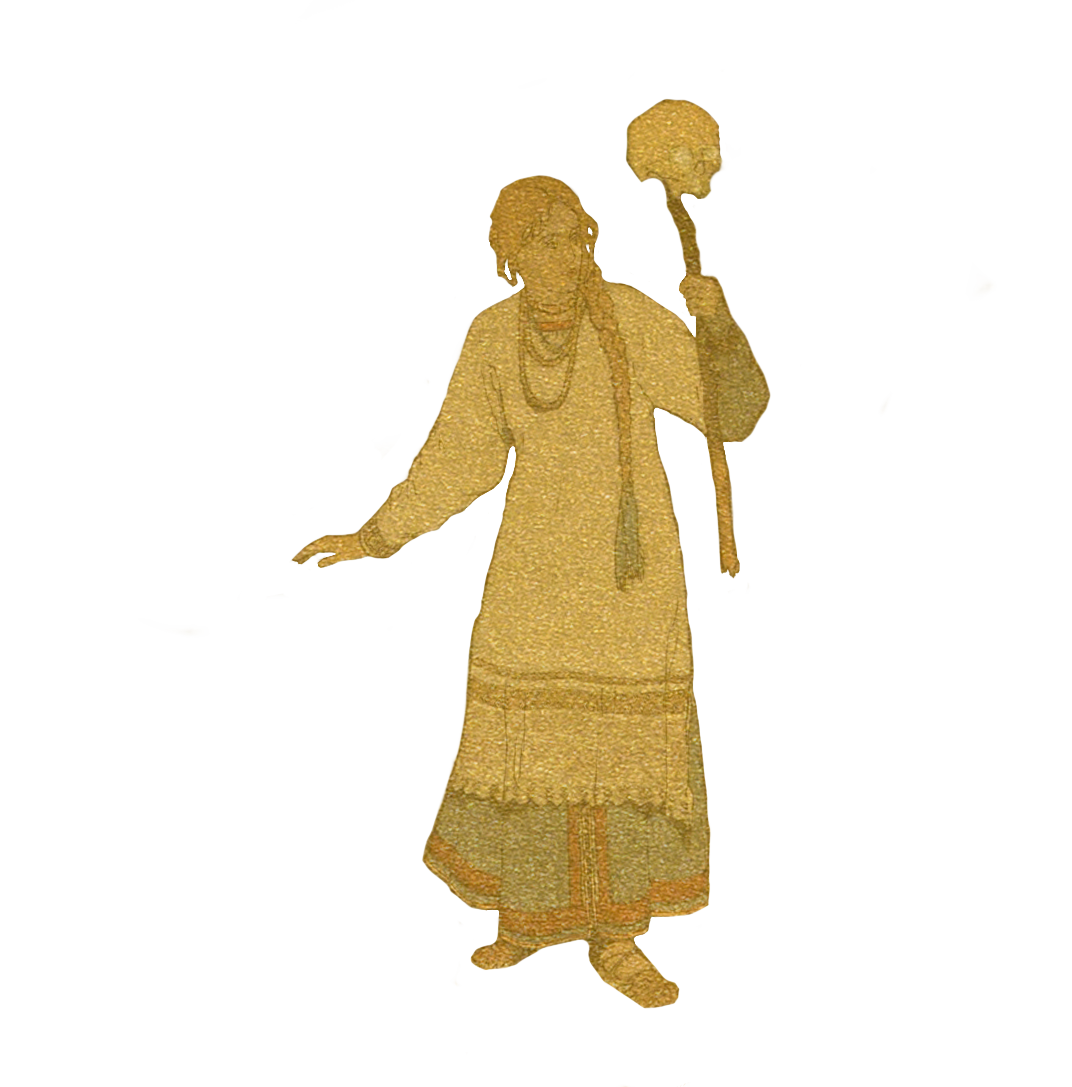
Fairy tales are the purest and simplest expression of the unconscious processes of the collective psyche.
Marie-Louise von Franz · The Interpretation of Fairy Tales
Individual sessions — online (Zoom) or in person in Lisbon.
To begin or to learn more, send a message.